Business owners and radio marketing executives get answers to their questions on marketing in a COVID-19 world by Roy H. Williams (the Wizard of Ads®) Ryan Deiss (founder of DigitalMarketer.com), and Daniel Whittington (Chancellor of Wizard Academy). Send your questions to: questions@wizardacademy.org and subscribe to these weekly videos, free for a limited time.
Roy H. Williams, the Wizard of Ads®, and Wizard Academy Chancellor, Daniel Whittington, recently announced that they will be offering weekly one-hour videos, in which they answer advertising and business questions submitted to them by email.
It’s a generous offer from one of the world’s truly original small business marketing and advertising experts, respected and admired especially by radio advertising professionals across the USA and Canada.
Roy and Daniel are joined by Ryan Deiss, Board Chairman of Wizard Academy and founder of DigitalMarketer.com. We’re talking serious marketing firepower here!
I hope you won’t pass by this golden opportunity to learn from the best and position yourself to better serve your customers in the challenging weeks and months ahead.
What do businesses, especially those closed due to the COVID-19 pandemic, need from their local radio stations right now? A relevant advertising message that addresses the new reality of closures, quarantines, business not-as-usual.At minimum, the information businesses need to provide is:
I. What is the advertiser doing to serve their customers’ needs while they’re closed?(We’re doing things differently for a while.)
Are they working at the store/shop/office, even though closed to the public?
Are they working from a remote location?
How can customers connect or interact with them while they’re closed?
Phone? (Voice, text, what numbers?)
Email? (How often checked?)
Can customers shop online? (Is website chat available?)
What additional help/information is available at their website?
For all of the above, what’s the target or estimated wait time for a response?
II. Offer a personal message of encouragement to let customers know that they’re not alone in this, preferably in the advertiser’s own voice and words. Share some good advice or a personal anecdote. Examples:
We realize this situation is unprecedented, inconvenient, difficult, and frustrating. But we’re in this together, so let’s work together to help each other, as neighbors and fellow citizens.
Share stories, especially ones that offer humor, cheer, inspiration, or edification. Maybe a favorite Bible verse, poem, or anecdote from your own experience. Anything to make a connection and engage in a positive way.
Remember that “sheltering in place” doesn’t mean complete isolation. Use your phone to stay in touch with friends. Make an extra effort to reach out to seniors and others who may be living alone.
Resources are available to help with personal, financial, and physical, mental, and spiritual health issues during the crisis. (Even if others are providing this information, it doesn’t hurt to share it yourself.)
If you’re unable to work and looking for something to do with your time, consider volunteering, making yourself available for delivery or some other needed service. Call your local hospital, school, or nonprofit and ask how you can be of help.
III. This is not a time to be silent but to be present, in touch, and actively engaged with your customers and community.
Don’t go dark.
Don’t stop communicating.
Eventually, things will return to normal and the businesses that maintain (or even increase) their share of voice will see their share of market rebound, as well, as has been abundantly documented* in previous downturns in the economy.
*a small sampling of articles on marketing and advertising during a recession. If you know of one that should be on this list, please share it in the comments below or email it to me.
ADVERTISING DURING A RECESSION (WARC publishes case studies of marketing excellence from all over the world. An excerpt from this article follows.)
More importantly, the data also reveal that a moderate increase in advertising in a soft market can improve share. There is a substantial body of evidence to show that a larger share of the market generally leads to higher return on investment.9
For the aggressive marketer, the data suggest that a more ambitious increase in expenditure, although reducing short-term profit, can take advantage of the opportunity afforded by a recession to increase market share even further.
Celebrities are paid handsomely for endorsing products and services; the bigger the celebrity, the heftier the fee.
Whether a celebrity endorsement is worth the sizable extra investment is debatable. It’s one thing to have a spokesman who is intimately, if not inseparably, associated with a brand. For instance, Tom Bodett’s decades-long association with Motel 6 has been a huge win for both parties. However, simply shelling out megabucks to have a well-known actor or sports figure attach their fame to your name doesn’t guarantee that you’ll recoup your investment.
But what if you could get that big celebrity endorsement at no cost? That’s what happened to one of my local clients in the early 1990’s.
Pullman, Washington’s last independent community bank was Bank of Pullman, which operated until 2001 when it was acquired by AmericanWest Bank (which in turn merged with Banner Bank in 2014). But 26 years ago, Bank of Pullman was still thriving as Pullman’s hometown community bank. I started calling on them when I moved here in 1979, working directly with its president, Emil Schell, and a decade later with his son, Gary Schell, who followed in his dad’s footsteps. Both men prided themselves in providing banking services to local families and businesses. Its key officers and employees had been with the bank for decades.
The bank was a regular advertiser with our local stations. Sometime in the late ’80s or early ’90s, Gary invested in a catchy jingle package, We’re Hometown People That You Know,to reinforce that special bond between the bank and its customers. It remains one of my all-time favorites. Here’s an example of one of Gary’s radio spots at the time.
Then, in 1993, something unexpected happened. Gary’s cousin Joan married comedian Rodney Dangerfield. And one day, Gary gets this cassette tape in the mail with a note from his new cuz, saying Rodney has created a spot for Bank of Pullman, as a gesture of goodwill. All of a sudden our little hometown bank has a big celebrity endorsement, free–no strings attached.
Gary told me the story, gave me the tape, and said he’d like to run it. I took it back to the studio and edited Dangerfield’s voiceover to fit in one of the special cuts from the Hometown People jingle package. The result was this spot.
Evidently, it impressed a few people. Earlier this year, someone in the Remember Pullman When Facebook group posted that he recalled Rodney Dangerfield endorsing Bank of Pullman on the radio and wondered what that was all about. Someone tagged me in that post, which sent me down a rabbit hole in search of an old cassette tape. Months later, while going through some old minidiscs, I found the two spots above, along with some other vintage material.
Twenty-six years later, the spot still makes me smile. I thought you might enjoy it, too.
And the pictures he painted so vividly made us see.
They made us think.
And they made us buy – whatever he was selling.
Paul Harvey was the master of spoken-word communication. His choice of words, melodic intonations, and impeccable phrasing influenced the thinking and behavior of millions of Americans for more than a half-century.
I recently came across a remarkable thirteen-minute video profile of Paul Harvey, narrated by Chicagoland DJ Bob Sirott, who also worked for ABC affiliate WLS-AM when this video was made. Paul Harvey fans will enjoy every minute of it.
HE TAUGHT US HOW TO SEE WITH OUR EARS. And if you’ll listen to the picture he paints in the space of just 17 seconds (beginning at 1:05), you’ll understand a little more of the power of pure audio, spoken-word artistry.
Advertisers and radio advertising professionals, take note of what he says beginning at 4:28, and again starting at 9:50. It’s pure gold for anyone who hopes to persuade people, to influence consumer behavior, to move goods and services.
You already know that “word-of-mouth” is powerful. Imagine how much more powerful it can be when you start controlling it?
“Half the money I spend on advertising is wasted; the trouble is I don’t know which half.”
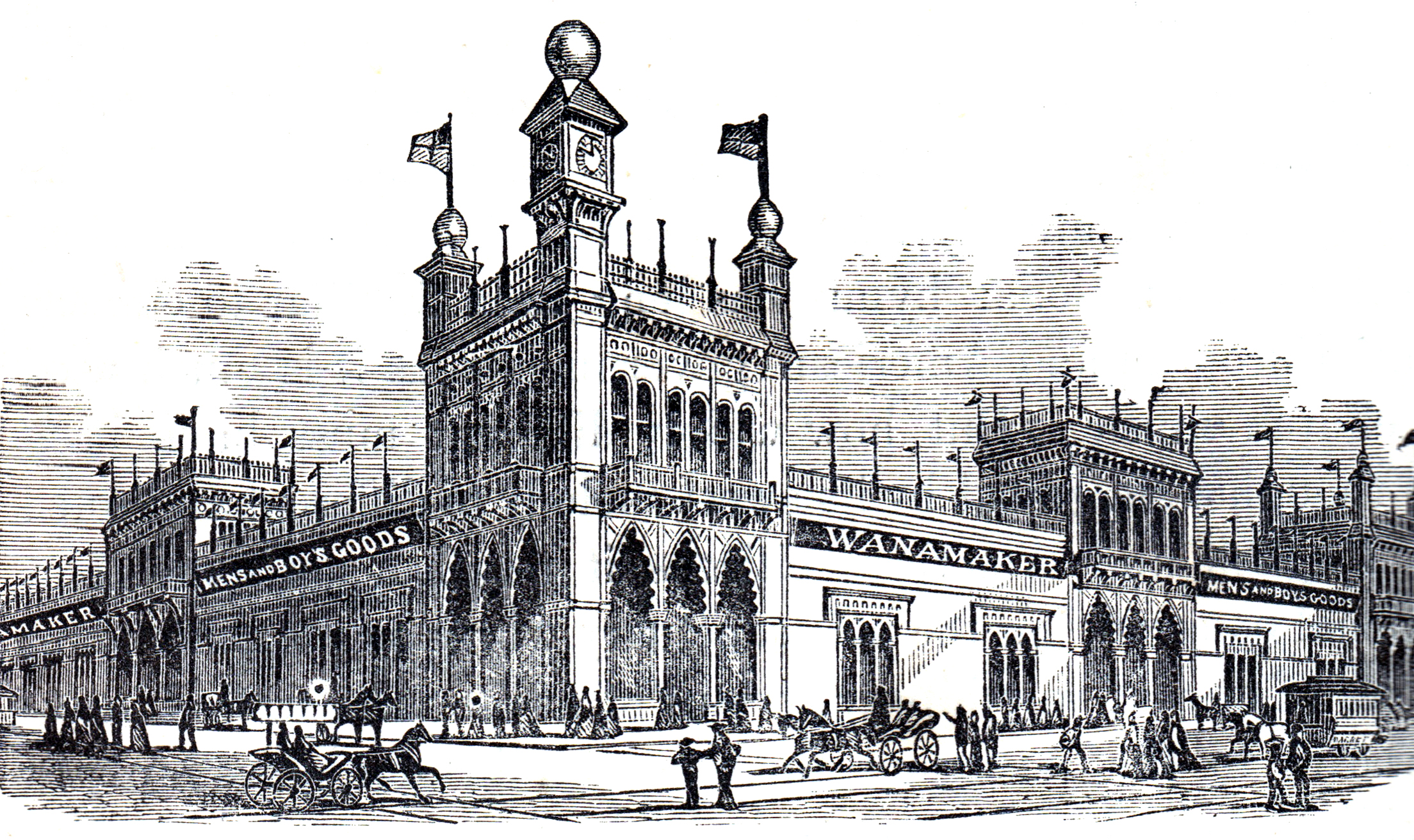
Wanamaker’s famous quote on advertising has been widely disseminated. For some, it has inspired bold risk-taking and marketing breakthroughs; “nothing ventured, nothing gained.” For others, it’s been little more than a bromide to justify laziness, complacency, and mediocrity in advertising.
Wanamaker, a practicing Christian, refused to advertise on Sundays. His newspaper ads were widely considered to be fact-based and trustworthy, and Wanamaker guaranteed the quality of his advertised merchandise in writing, allowing customers to return any unsatisfactory purchases for a cash refund.
Costco, Amazon, WalMart, Nordstrom’s, and many other other successful retailers today emulate his customer-centric policies.
Ever an innovator in his marketing and attentiveness to the customer experience, his department store was the first to provide an in-store restaurant; he even installed a magnificent pipe organ, at a cost (adjusted to 2018 standards) of nearly three million dollars, it attracted throngs to the free concerts he provided in the Grand Court. That organ is still in regular use today at the Macy’s Department Store that occupies the location of the original Wanamaker’s in Philadelphia.
Meanwhile, in England, a contemporary of Wanamaker’s named Thomas Smith wrote a book called Successful Advertising. It contained this now white-haired explanation of the need for repeated exposure to advertising in order to achieve success:
The first time people look at any given ad, they don’t even see it. The second time, they don’t notice it. The third time, they are aware that it is there. The fourth time, they have a fleeting sense that they’ve seen it somewhere before. The fifth time, they actually read the ad. The sixth time they thumb their nose at it. The seventh time, they start to get a little irritated with it. The eighth time, they start to think, “Here’s that confounded ad again.” The ninth time, they start to wonder if they’re missing out on something. The tenth time, they ask their friends and neighbors if they’ve tried it. The eleventh time, they wonder how the company is paying for all these ads. The twelfth time, they start to think that it must be a good product. The thirteenth time, they start to feel the product has value. The fourteenth time, they start to remember wanting a product exactly like this for a long time. The fifteenth time, they start to yearn for it because they can’t afford to buy it. The sixteenth time, they accept the fact that they will buy it sometime in the future. The seventeenth time, they make a note to buy the product. The eighteenth time, they curse their poverty for not allowing them to buy this terrific product. The nineteenth time, they count their money very carefully. The twentieth time prospects see the ad, they buy what is offering.
In Smith’s day, newspaper and magazines were the only mass-media advertising available to merchants. Their counterparts today can find success advertising on radio, television, the internet, and a plethora of lesser-reach advertising choices. Whichever medium or media you choose, the question remains: how often should your advertising message be repeated?
If your message is strong, and the timing and audience are ripe, once may be sufficient. A timely Facebook post might be enough to get the few dozen folks you need to take advantage of your dinner special.
But if your message is strong, and the timing and audience are ripe, it also may be repeated successfully for decades, as in the case of the classic Maxwell Sackheim/Victor Schwab advertisements for Sherwin Cody’s English home study course.
The same holds true of the many jingles and slogans that have been woven into the fabric of our lives over the past century. Those of us who were around prior to 1970 can still recall cigarette jingles that have not aired for nearly a half-century.
To illustrate the point, just fill in the blanks below with the name of the advertiser:
“_________________________. When you care enough to send the very best.” – used continuously since 1944, it was created by one of the company’s salesmen on an index card
“__________________. Fifteen minutes could save you fifteen percent or more on car insurance.” – one of radio’s top advertisers.
“More saving, More doing. That’s the power of the _____________________________.” – another of radio’s top advertisers.
“I’m lovin’ it.” ____________________.
“__________. It’s everywhere you want to be.”
“________________. Eat fresh.”
“Just do it.” ________
“___________________. Because you’re worth it.”
“Every woman alive wants ____________________.”
“Nothing gets between me and my __________________.”
Pretty easy, huh?
And how much effort did you expend to memorize them in the first place?
None. You were simply exposed to them over and over again, and they’ve become indelibly etched into your consciousness.
For those in the Pullman/Moscow market who may be reading this, a couple more:
“_____________________. It’s not just a job. It’s a future.” – I wrote this one for a local advertiser whose reach has expanded dramatically over the past 35 years.
“______________________. You’re gonna love what happens next.” – Another tagline I developed for a local advertiser. You know his name. You may even find yourself singing it in your head.
Repetition is vital to most successful advertising. To paraphrase one of my major influencers, Roy H. Williams:
Repetition is the hammer that drives the nail (your message) ever deeper into the mind of your customer.
Repetition is necessary because sleep is the great eraser of advertising.
People stay “sold” like grass stays “mowed.” You need to keep at it, keep at it, and keep at it.
This is why one of my longtime clients hasn’t changed their ad in over 25 years. It’s a singing ad. The music production company provided the tune and the singer, I wrote the lyrics. Again, if you live in the Pullman area, you can probably guess who I’m talking about. And just for the record, the reason the ad never changes isn’t because we’re lazy; it’s because the advertisement is still getting results for them. Skeptical? Call and ask them how they know it’s working.
How’s your advertising working these days? Are people talking about it? Are they responding to it?
By Photos by Bertilvidet, European People’s Party, Republican Conference of the United States House of Representatives. Collage/graphic by Didia [CC BY-SA 4.0 (https://creativecommons.org/licenses/by-sa/4.0)%5D, via Wikimedia Commons
Whether you’re a business trying to engage consumers or a political candidate wooing voters, before your ad hits the airwaves, make sure it passes the Gossage test:
“An ad should ideally be like one end of an interesting conversation.”
(Howard Luck Gossage)
The “interesting” part depends on your content and its relevance to the listener. As to the “conversation,” there are two ways you can engage the listener: either as a participant or an eavesdropper. You can talk directly to me, or you can let me listen in on someone else’s conversation.
The late Dick Orkin was a master at creating great theater-of-the-mind using dialogue, as in this spot for Time Magazine:
Listener-as-participant is the approach most often taken by radio writers. With the right script and the right voice, nothing else is needed to capture and hold our attention, as illustrated by this award-winning spot for Ortho’s Fire-Ant Killer, delivered by killer voice actor Steve Morris:
It’s true that national advertisers and ad agencies have greater resources at their disposal than most local small businesses can afford. Does that mean you must settle for second-rate work? Hardly, especially in radio, the only pure-sound medium.
Listen to this spot for a local music store, which ran successfully for many years, featuring the voice of Cliff Miller, lead singer of local band The Fabulous Kingpins and an employee of the store at the time. I recorded Cliff on a portable Sony Walkman in a teaching room above the store.
Another local example – this time we’re eavesdroppers, listening to a story as it’s being told by the participants:
Whether you’re hearing that spot for the first time or tenth, chances are it held your attention. And holding a listener’s attention long enough to make a meaningful impression is the goal of every advertising message. Some succeed; too many fail. But one of the keys to success is having a firm grasp of whether your listener is going to be a participant or an eavesdropper.
This becomes even more important in the other spoken-word broadcast medium, television, because now you have to control the picture, as well as the words.
For example, there’s a political race in our area that’s drawing national attention, the race for U.S. Representative for Washington’s District 5 between Cathy McMorris Rodgers and challenger Lisa Brown. Stay with me for a moment and you’ll see just how audience engagement can be crippled by a single, simple lapse in perspective.
First, here’s a TV spot for Congresswoman Cathy McMorris Rodgers in which two presenters take turns talking to us:
It’s an effective approach. The alternating conversations keep us engaged as the story moves forward. Cathy comes across as confident, competent, and comfortable.
Now, here’s a two-and-a-half minute video featuring her challenger, Lisa Brown, also talking directly to us…or so it seems. Because at :53, 1:30, and 2:06 into the spot, the producer inexplicably decides to show us that it’s not a conversation; it’s a performance, as the candidate is viewed from the side and further away from the camera. How does this shift in perspective enhance engagement or credibility?
9-29-22 Update – Brown’s campaign video was subsequently taken down following her unsuccessful bid to unseat the incumbent, so the video is no longer available. -RS
Setting aside the candidates’ political differences, McMorris Rogers’ spot is decidedly more engaging. Brown’s decision to call attention to the fourth wall* for no good reason is an unnecessary distraction. It draws our attention away from the candidate and toward the video producer! With all the money being thrown at this election, I’m surprised the Brown camp let this get past them.
For those of us who work in spoken-word media as ad writers or producers, it’s essential to understand the distinction between participant and eavesdropper throughout the message. And since a campaign consists of multiple messages, it’s usually advisable to preserve that distinction from one message to the next. Consistency will help drive your message, your business, your brand deeper into the minds of your prospects.
Need help with your advertising? It’s as near as your phone. Let’s talk!
——
*The “fourth wall” is a convention in performance art, an invisible barrier separating the audience from the action taking place onstage or onscreen. We, the audience, can see through the wall at the action taking place; but they, the actors, cannot see us watching them, as they go about their performance. However, when an actor takes cognizance of the audience, either through direct address or reference, he is said to be “breaking” the fourth wall. Breaking the fourth wall turns an observer into a participant, as when House of Cards’ Frank Underwood suddenly looks straight into the camera and confides in the viewer, or in this scene from Blazing Saddles.
P.S. Can you imagine James Bond turning to the camera and start talking to you? Never!
A sometimes controversial, unabashedly conservative first-term state senator is consistently vilified by the press throughout his first term in office. In the next election cycle, he faces a challenger from within his own party.
The challenger is a popular local figure whose decades of public service include two terms as mayor and two terms on the city council of the largest city in his district, in addition to appointments to several city and state commissions. Signs supporting him sprout up like dandelions during the spring campaign.
In a May 3, 2018 article in the The Lewiston Tribune, writer William Spence set the stage for the contest. He wrote:
[Comstock] decided to run for the Legislature because he disagrees with Foreman on certain issues, and with the way he treats some constituents.
For example, he was offended by Foreman’s comment during a recent forum that Latah County, and the university and greater Moscow area in particular, is a “cesspool of liberalism.”
“To me, we’re a good mix of liberals, conservatives and moderates, and we all seem to get along,” Comstock said.
Foreman had a number of other widely publicized run-ins with constituents during his first term, including telling one “liberal nuttard” at the Latah County Fair last year to “go straight to hell.” Earlier this year he threatened to call the police on a group of Planned Parenthood representatives, and suggested “hard-core, left-wing extremists” are turning Moscow into “a big, selfish, godless town without a soul.”
When it comes to the issues, Comstock said his biggest disagreement with Foreman is over education funding. He supports an increased investment in public schools, as well as higher education and UI; Foreman, by contrast, has twice voted against the higher education budget, saying it had “too much pork.”
Both candidates reached out to voters in their campaign advertising, setting forth their positions. The incumbent relied mainly on radio to get his message to the voters. His :60-second campaign spot was simple, straightforward, and focused:
The challenger also did a bit of radio advertising, but placed greater emphasis on print and social media. The challenger’s war chest was considerably larger than the incumbent’s, and his campaign expenditures were more than three times greater ($19,355.06 vs. $5,671.56). Based solely on the relative financial strengths of the two campaigns, the challenger should easily have coasted to a decisive victory.
Instead, he lost the election by 109 votes.
Evidently the message counted for more than the money.
Zoom out to a statewide perspective: the Idaho governor’s race. Ten individuals ran, spending nearly $11 million in the process. The largest spenders in both parties lost their bids. On the Republican side, Tommy Ahlquist spent nearly $4.5 million (more than $2.5 million out of his own pocket); he lost to Lt. Governor Brad Little, whose campaign expenditures amounted to $2.5 million. The results on the Democrat side were even more lopsided. The victor in that race, Paulette Jordan, spent $395,000 on her campaign; rival A. J. Balukoff spent more than six times that amount. Jordan received 58.6% of the vote; Balukoff, 40.1%.
Evidently the message counted for more than the money.
In the introduction to his book, FOCUS: THE FUTURE OF YOUR COMPANY DEPENDS ON IT, positioning and branding expert Al Ries sets forth his thesis:
The sun is a powerful source of energy. Every hour the sun washes the earth with billions of kilowatts of energy. Yet with a hat and some sunscreen you can bathe in the light of the sun for hours at a time with few ill effects.
A laser is a weak source of energy. A laser takes only a few watts of energy and focuses them in a coherent stream of light. But with a laser you can drill a hole in a diamond or wipe out a cancer.
When you focus a company, you create the same effect. You create a powerful, laserlike ability to dominate a market. That’s what focusing is all about.
When a company becomes unfocused, it loses its power. It becomes a sun that dissipates its energy over too many products and too many markets.
The same principle holds true for a message – in this case, an advertising message. Whether for a political candidate, a business, professional, or non-profit organization, focus can mean the difference between a message that penetrates the brain and one that goes in one ear and out the other.
When it comes to interpersonal communication, nothing is more powerful than human speech, or what we like to call “word-of-mouth.”
Word-of-mouth is the original “social media.” Because speech is our primary form of communication. (Print, in all its forms, is just an imitation of speech.)
Radio is the only pure-audio, pure-speech mass medium at your disposal. Radio puts your word-of-mouth on steroids.
It’s a powerful medium. Use it effectively. Focus your message.
He is “…hopelessly out of date, and amazingly current. He was the outstanding copywriter and strategist of his time; he made $100,000 a year and more writing advertising when that kind of money was important even to the U.S. Treasury.”
The writer was talking about Claude C. Hopkins (1866-1932), a pioneer of modern advertising. In 1923, he wrote a little volume entitled, Scientific Advertising. No less a giant than David Ogilvy thought it so essential a work that he wrote:
“Nobody should be allowed to have anything to do with advertising until he has read this book seven times. It changed the course of my life.”
Four years later, Hopkins published his autobiography, My Life In Advertising. These two books, still readily available, are the distillation of a remarkable life’s work in sales, advertising, and promotion. For my money, they’re worth their weight in gold to anyone who sells, creates, or uses advertising to build an enterprise.
Hopkins himself wrote of his philosophy and methods:
“I am sure I would fail if I tried to advertise the Rolls-Royce [as Ogilvy later did with great success], Tiffany & Co. or Steinway pianos. I do not know the reactions of the rich. But I do know the common people. I love to talk to laboring-men, to study housewives who must count their pennies, to gain the confidence and learn the ambitions of poor boys and girls. Give me something they want and I will strike the responsive chord. My words will be simple, my sentences short. Scholars may ridicule my style. The rich and vain may laugh at the factors which I feature. But in millions of humble homes the common people will read and buy. They will feel that the writer knows them. And they, in advertising, form 95 percent of our customers.”
He gave the advertising world concepts we take for granted today: testing and measuring for results, product sampling, demonstration selling, the use of coupons, the advantage of specificity over generalization, selling service, cooperative advertising, preemptive advertising—his work for Schlitz Beer is a classic example:
“I went through the brewery. I saw plate-glass rooms where beer was dripping over pipes, and I asked the reason for them. They told me those rooms were filled with filtered air, so the beer could be cooled in purity. I saw great filters filled with white-wood pulp. They explained how that filtered the beer. They showed how they cleaned every pump and pipe, twice daily, to avoid contaminations. How every bottle was cleaned four times by machinery. They showed me artesian wells, where they went 4000 feet deep for pure water, though their brewery was on Lake Michigan. They showed me the vats where beer was aged for six months before it went out to the user…
I came back to the office amazed. I said: ‘Why don’t you tell people these things? Why do you merely try to cry louder than others that your beer is pure? Why don’t you tell the reasons?’
‘Why,’ they said, ‘the processes we use are just the same as others use. No one can make good beer without them.’
‘But,’ I replied, ‘others have never told this story. It amazes everyone who goes through your brewery. It will startle everyone in print.'”
The result? Hopkins gave meaning to purity. Schlitz, the number five brewer at the time, leapfrogged to a first-place tie within just a few months. He considered it one of his greatest accomplishments and used the technique successfully for other products and clients.
Want to become better at what you do? Take a lesson or two from the past and get yourself a copy of the combined volume of My Life in Advertising and Scientific Advertising by Claude C. Hopkins.
You can also download a free copy of the latter volume here. Or here.
The finalists in the 2018 Radio Mercury Awards have been announced.
The 100 or so commercials that made the cut represent some of the best work being done in radio advertising today.
From this group, a dozen or two will emerge as award-winners, taking home the coveted RMA “tube” and, in most cases, a substantial cash prize, as well.
In my experience, ads that perform well at the cash register rarely win recognition at this level.
And ads that win awards sometimes don’t accomplish much more than that.
But when a commercial offers a compelling sales message wrapped in an entertaining story, it can achieve both.
Here are a few of my favorites from this year’s competition:
From FCB Chicago, this spot for Radio Flyer wagons (you had one, didn’t you?) entitled “Stinky Broccoli Forest.”
BarrettSF‘s spot for Exchange Bank, “Oxymoron,” turns this figure of speech into a plausible case for the bank’s “mix of tradition and the future.” If the bank is meeting or exceeding its customers’ expectations, this message ought to make ’em feel good about their choice.
“Bad Decisions” from Frederick Swanston for client Travel Centers of America/Minute Mart is a great example of what can be accomplished (with a chuckle) in just 15 seconds.
From agency Publicis,“Charmin Shiny Hiney” might make the gentle Mr. Whipple blush just a bit. Not your grandfather’s Charmin spot, that’s for certain.
If you’re seeking inspiration to enliven your brand or sales message, you could do a lot worse than to listen to the great work found in the Radio Mercury Awards’ online archives.
Congratulations to all of this year’s RMA finalists.

 Pullman, Washington’s last independent community bank was Bank of Pullman, which operated until 2001 when it was acquired by AmericanWest Bank (which in turn merged with Banner Bank in 2014). But 26 years ago, Bank of Pullman was still thriving as Pullman’s hometown community bank. I started calling on them when I moved here in 1979, working directly with its president, Emil Schell, and a decade later with his son, Gary Schell, who followed in his dad’s footsteps. Both men prided themselves in providing banking services to local families and businesses. Its key officers and employees had been with the bank for decades.

 Meanwhile, in England, a contemporary of Wanamaker’s named Thomas Smith wrote a book called Successful Advertising. It contained this now white-haired explanation of the need for repeated exposure to advertising in order
 But if your message is strong, and the timing and audience are ripe, it also may be repeated successfully for decades, as in the case of the classic Maxwell Sackheim/Victor Schwab advertisements for Sherwin Cody’s English home study course.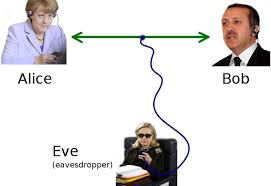

 A sometimes controversial, unabashedly conservative first-term state senator is consistently vilified by the press throughout his first term in office. In the next election cycle, he faces a challenger from within his own party.
 The finalists in the 2018 Radio Mercury Awards have been announced.
 RodSpots: the Next Chapter